Schindler's List: A Powerful Story of Humanity Amidst the Holocaust
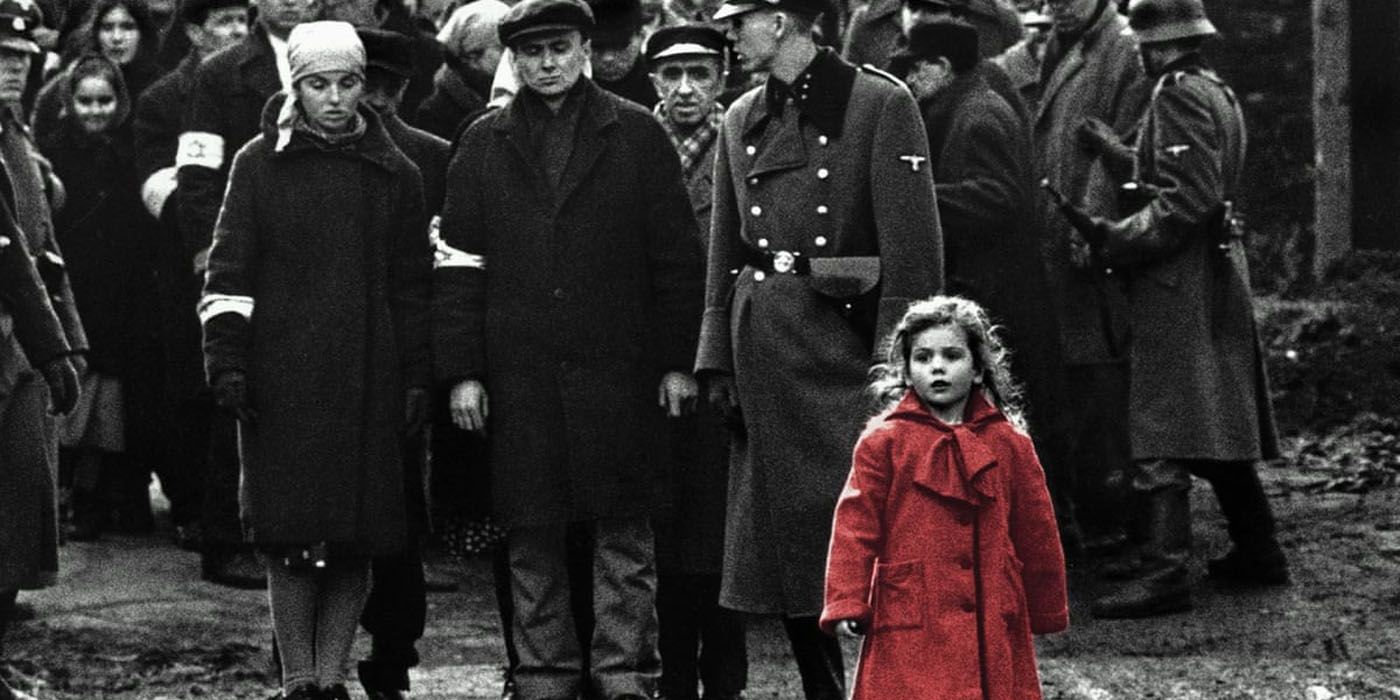
Schindler's List is a 1993 American epic historical drama film directed and produced by Steven Spielberg and written by Steven Zaillian. It is based on the 1982 novel Schindler's Ark by Australian novelist Thomas Keneally. The film follows Oskar Schindler, a German industrialist who saved more than a thousand mostly Polish–Jewish refugees from the Holocaust by employing them in his factories during World War II. It stars Liam Neeson as Schindler, Ralph Fiennes as SS officer Amon Göth, and Ben Kingsley as Schindler's Jewish accountant Itzhak Stern.
1. Type of narrative
Third-Person Omniscient
Spielberg chose to shoot this movie the way he might if he were really there filming what took place in Krakow. That means a lot of the narrative bells and whistles go out the window, leaving us with a just-the-facts-ma'am narrative.
2. Theme of narrative
Historical
Schindler's List is based on the true story of the Holocaust and Oskar Schindler who saved over 1200 Jews during WWII.
3. The era of the film
World War II
In Kraków during World War II, the Nazis force local Polish Jews into the overcrowded Kraków Ghetto. Oskar Schindler, a German Nazi Party member from Czechoslovakia, arrives in the city, hoping to make his fortune.
4. A note on the film's director
Steven Allan Spielberg is an American film director, producer and screenwriter. A major figure of the New Hollywood era and pioneer of the modern blockbuster, he is the most commercially successful director in history. He is the recipient of many accolades, including three Academy Awards, two BAFTA Awards, and four Directors Guild of America Awards, as well as the AFI Life Achievement Award in 1995, the Kennedy Center Honor in 2006, the Cecil B. DeMille Award in 2009 and the Presidential Medal of Freedom in 2015. Seven of his films have been inducted into the National Film Registry by the Library of Congress as "culturally, historically or aesthetically significant. In 1993, Spielberg directed back-to-back blockbuster hits with the science fiction thriller Jurassic Park, the highest-grossing film ever at the time, and the Holocaust drama Schindler's List, which has often been listed as one of the greatest films ever made. He won the Academy Award for Best Director for the latter and the 1998 World War II epic Saving Private Ryan.
NARRATIVE FACTORS
1. Genre
A historical drama (also period drama, period piece or just period) is a dramatic work set in a past time period, usually used in the context of film and television, which presents historical events and characters with varying degrees of fictional elements such as creative dialogue or fictional scenes which aim to compress separate events or illustrate a broader factual narrative. The biographical film is a type of historical drama which generally focuses on a single individual or well-defined group. Historical dramas can include romances, adventure films, and swashbucklers.
2. Plot
It is based on the 1982 novel Schindler's Ark by Australian novelist Thomas Keneally. The film follows Oskar Schindler, a German industrialist who saved more than a thousand mostly Polish–Jewish refugees from the Holocaust by employing them in his factories during World War II.
3. Character
Oskar Schindler
Played by Liam Neeson
Schindler is a womanizer and con artist who never hesitates to do something outside the law, such as placing bribes, to get what he wants. His metamorphosis into a hero is slow in coming. Initially, he is indifferent to the plight of the Jews and has little concern for the moral issues at stake.
Tzhak Stern
Played by Ben Kingsley
Schindler’s Jewish accountant and conscience. Stern is an intelligent man who never loses his pride in the face of the violent and dehumanizing conditions the Jews face under the Nazi regime. He is able to influence the good, moral side of Schindler.
Amon Goeth
Played by Ralph Fiennes
A Nazi soldier in charge of building of Plaszów work camp. Goeth is a cruel, sadistic man deeply entrenched in Nazi philosophy. Goeth exhibits a true hatred for the Jews, at times shooting them randomly from his balcony high above the labor camp. He and Schindler share many common traits, such as greed and callous self-centeredness, but Goeth gives himself totally to evil and hatred. He is also deeply conflicted, tornbetween feelings of attraction and disgust for his Jewish maid. Goeth represents the all-consuming hatred of the Nazi Party.
Emilie Schindler
Played by Caroline Goodall
Oskar Schindler’s wife. Emilie is a good and patient woman who loves Schindler unconditionally, even as he cheats on her continually. She expresses only exasperation upon finding another woman in Schindler’s apartment but is visibly hurt when she finds that the doorman does not even know Schindler is married. Emilie has pride, however, and leaves Schindler in Poland because he cannot promise to be faithful to her. She tells him to “send chocolate” to her at home in Czechoslovakia.
Helen Hirsch
Played by Embeth Davidtz
Amon Goeth’s Jewish maid, who lives a tortured life as the object of Goeth’s desire and disgust. Helen Hirsch is a strong woman lost in despair, forced to work for Goeth, whom she despises. She faces brutal, unpredictable beatings at Goeth’s hands and begins to lose hope, accepting the probability of her own death. She is representative of victims who experienced psychological abuse under the Nazi regime.
4. Setting
Poland The movie takes place in and around the city of Krakow, Poland and the nearby territory: mostly in the Jewish ghetto set up after the Nazis conquered the country, and the Plaszow labor camp set up outside of Krakow. Spielberg set the film here because… well, because that's where the events took place.
NON NARRATIVE FACTORS
1. Colour
the color used in the movie is black and white. According to Spielberg, the film should be “drained of color to reflect the draining of life.” The only use of color in this film was the red coat of a little girl. This wash of red color was used to draw attention to a specific character and to tug on our heartstrings when we discover that she has died as well. The red is so vibrant and striking against the sea of black and white that we are immediately drawn to her character’s movements and reactions. We cannot help but to feel for her and to follow her movements. Spielberg used the elements of Production Design in this manner in order to drawn audiences in to the horrid events of the Holocaust.
2. Lighting
The Film makes really good use of Naturalistic lighting as well as shades, shadows, and silhouettes.The choice of black and white allows the viewer to concentrate more on details, for example Steven Spielberg uses light, or takes it away to indicate a mood of stress and unhappiness .
3. Camera shots, angles and movement
Steven Spielberg loves wide lenses, and he uses them to film tracking shots, over the-shoulder shots, close-ups, and any other shot in which he wants to make the foreground subject dominate the background. He can be very bold in his use of wide lenses.
4. Texture
Polyphonic.the melody and harmony lines are distinguishable but have moments where they melt together as one, but for a vast majority they retain their own individual sounds.
5. The selected movie is of film noir.
6. Climax
The climax is the high point of the movie where the protagonist, based on the knowledge gained from the rising action, determines what the final action needs to be taken in order to resolve the conflict. The falling action ties up or resolves any minor loose story ends. The denouement is the ending of the movie. Viewers meet characters and follow their plights closely, developing a connection to these individual victims who are themselves representative of all Holocaust victims.
The Story Behind Schindler's List
At the heart of Schindler's List is the story of Oskar Schindler, a German businessman who, during World War II, used his wealth and influence to save over 1,100 Jewish lives from the clutches of the Nazi regime. Based on the novel Schindler's Ark by Australian author Thomas Keneally, the film presents a narrative that is both intimate and monumental.
Oskar Schindler, played by Liam Neeson, is portrayed as a complex character who undergoes a profound transformation. Initially, Schindler is shown as a self-interested, opportunistic entrepreneur who seeks to profit from the war by running a factory that employs Jewish workers, mostly from the Kraków ghetto. However, as the atrocities of the Holocaust unfold, Schindler becomes increasingly aware of the brutality of the Nazi regime and the fate of his workers. This awareness eventually drives him to risk his life, and his fortune, to protect the Jews under his care.
The central plot of the film follows Schindler's efforts to save his workers from being deported to concentration camps. By using his position and influence, Schindler convinces Nazi officials to allow him to employ Jews in his factory, even paying bribes and forging documents to create a list of names that would ensure their safety. The "Schindler's List" – a record of those he saved – became an iconic symbol of human compassion and courage during a time of unimaginable evil.
Spielberg's Vision and Approach
Steven Spielberg, known for his talent in creating emotionally resonant films, took on Schindler's List with a deep sense of responsibility. The film was a departure from his usual fare, as he had built a reputation for directing adventure films such as Raiders of the Lost Ark and E.T. the Extra-Terrestrial. Yet, Spielberg was drawn to the story of Schindler, not just because of its historical importance, but also because of its emotional complexity and the lessons it offered.
Spielberg's approach to the film was both respectful and deliberate. The movie is shot in stark black and white, which adds a sense of realism and timelessness. It also emphasizes the gravity of the historical events being depicted. By removing color from the film, Spielberg wanted to avoid romanticizing the story and instead create a more visceral, realistic experience. The stark contrast of black-and-white cinematography served to convey the moral clarity and darkness of the period while also ensuring the film did not become a mere spectacle.
The director also worked with survivors and historians to ensure the film's historical accuracy. Many of the actors in the film, including Neeson, Ralph Fiennes (who played the sadistic Nazi officer Amon Göth), and Ben Kingsley (who portrayed Schindler's aide Itzhak Stern), went through intense preparation to understand the gravity of their roles and the historical context.
The Human Cost of War
At its core, Schindler's List is about the human cost of war and the unimaginable suffering endured by millions during the Holocaust. The film does not shy away from showing the brutality of the Nazi regime, depicting the systematic murder of Jews, the destruction of families, and the horrific conditions in concentration camps. One of the most harrowing scenes is the liquidation of the Kraków ghetto, where innocent men, women, and children are rounded up and shot in cold blood. These scenes are as gut-wrenching as they are important, as they force the viewer to confront the full extent of the atrocity.
However, the film also offers a message of hope and redemption, showing how individuals can make a difference even in the darkest of times. Schindler's transformation from a war profiteer to a savior of over a thousand Jews demonstrates the potential for good within the human spirit. His story is a testament to the power of moral courage and the importance of standing up against evil, no matter the cost.
The Legacy of Schindler's List
Since its release, Schindler's List has had a lasting impact on audiences worldwide. It is widely regarded as one of the greatest films ever made, winning seven Academy Awards, including Best Picture and Best Director for Spielberg. The film also sparked renewed interest in the Holocaust, encouraging the public to learn more about the atrocities of the period and the stories of survivors.
In addition to its critical acclaim, Schindler's List played a pivotal role in raising awareness of the Holocaust. The film's popularity helped introduce the horrors of the genocide to new generations, ensuring that the memory of the atrocities would not be forgotten. Many educators now use Schindler's List as a teaching tool to help students understand the history of the Holocaust and the importance of combating hatred and intolerance.
The movie also contributed to a broader discussion about the ethics of human behavior during times of crisis. Schindler's actions – his willingness to risk everything to save others – serve as a reminder of the profound impact one individual can have, even in the face of overwhelming evil. The film challenges viewers to reflect on their own moral choices and the role they play in shaping a more just world.
Conclusion: A Story of Hope and Humanity
Schindler's List is a film that captures the darkest chapter of human history while offering a glimmer of hope through the story of one man's incredible journey from opportunism to heroism. Spielberg's masterful direction, combined with powerful performances, makes the film a haunting and necessary exploration of the Holocaust and the enduring human capacity for both cruelty and kindness.
The story of Oskar Schindler and the lives he saved continues to inspire and remind us of the importance of standing up against injustice, even when the cost is high. The film's legacy is not just a historical recounting but a profound moral lesson that resonates across generations, encouraging us to never forget the past and to always fight for the dignity of every human being.
As the world continues to confront new challenges and injustices, Schindler's List remains a timeless reminder of the power of individual action in the face of overwhelming evil.
suggestions towards the movie.
Schindler's List" is a cinematic masterpiece that serves as a powerful testament to the resilience of the human spirit in the face of unimaginable tragedy. Schindler's list makes people weep tears of gratitude. Above all a must watch movie.
- Get link
- X
- Other Apps
Comments
Post a Comment